







Search Results for: store closure turmoil

Philippine %Arabica stores suddenly hit by closure turmoil; official response cites termination of partnership and hacked account
On January 30, multiple %Arabica stores in the Philippines suddenly closed their doors, and its official Instagram account also appeared to be deactivated, sparking speculation among local consumers and media about whether the brand would withdraw from the Philippine market. The next day, %Arabica issued a statement on Facebook, saying it had terminated its partnership with former Philippine partner Allue Hortaleza, that existing stores were temporarily closed, and that it had found a new agency, promising to resume operations within the year. Regarding the account deactivation, the official explanation was that it had been hacked, and updates have now resumed. The former partner also issued a statement on February 1, saying it would continue to provide high-quality coffee. Behind the incident, some netizens speculated that the post-pandemic business recovery prompted the former partner to strike out on its own. How exactly will this sudden breakup turmoil affect %Arabica's future in the Philippines? [more…]

Independent coffee shops hit by the 9.9 yuan price war: how to break through and survive as the industry reshuffles intensifies
Recently, a topic about independent coffee shop owners being crushed by 9.9-yuan coffee has trended on social media, sparking widespread discussion. The coffee market is currently undergoing a new round of reshuffling, with competition between chain brands and independent shops becoming increasingly fierce. Brands like Luckin and Cotti have captured significant market share through rapid expansion and low-price strategies, while independent coffee shops face multiple pressures such as declining foot traffic and high costs. Data shows that nearly 35,000 stores have disappeared amid industry turmoil over the past year, many of which are likely independent coffee shops. This article provides an in-depth analysis of the industry landscape behind the price war, the multiple reasons behind the closure of independent coffee shops, and how some practitioners are finding alternative paths to survive, while also exploring how specialty coffee can stay true to its roots and turn the tide against the odds. [more…]

Grandpa Doesn't Make Tea closes multiple stores in succession, rapid expansion goals face real-world test
Recently, the new-style tea beverage brand Grandpa's Tea, originating from Wuhan, has been reported to have closed or withdrawn stores in multiple locations, including Zibo in Shandong, Suzhou in Jiangsu, and Poyang in Jiangxi, sparking consumer concerns about its business condition. The brand's co-founder had set an expansion target of at least 4,500 stores in 2025, striving for 5,000, but as of October 18, only 2,274 stores were in operation, a clear gap from the goal. Meanwhile, well-known tea brands like Xiamen's Sevenbus and Shenzhen's 813 Bayishan have also fallen into store closure controversies. In response to external doubts, Grandpa's Tea stated that adjustments to individual stores are normal optimization actions by franchisees and that overall operations are sound. This article will sort out the ins and outs of the incident, presenting the brand's response and industry background. [more…]

Starbucks Malaysia faces sustained boycott, nearly 50 stores have suspended operations
Affected by the global boycott wave triggered by the Israeli-Palestinian conflict, Starbucks has suffered a severe blow in the Malaysian market. According to multiple media reports, nearly 50 Starbucks stores in the country have suspended operations over the past year, and operator Berjaya Food has fallen into losses for four consecutive quarters. Although the brand has repeatedly clarified its position and taken public welfare measures in an attempt to win back consumer trust, the boycott movement has still not subsided, and store sales have been slow to recover. This turmoil not only reflects the profound impact of geopolitics on commercial brands, but also leaves Starbucks' future in the Southeast Asian market full of uncertainty. [more…]
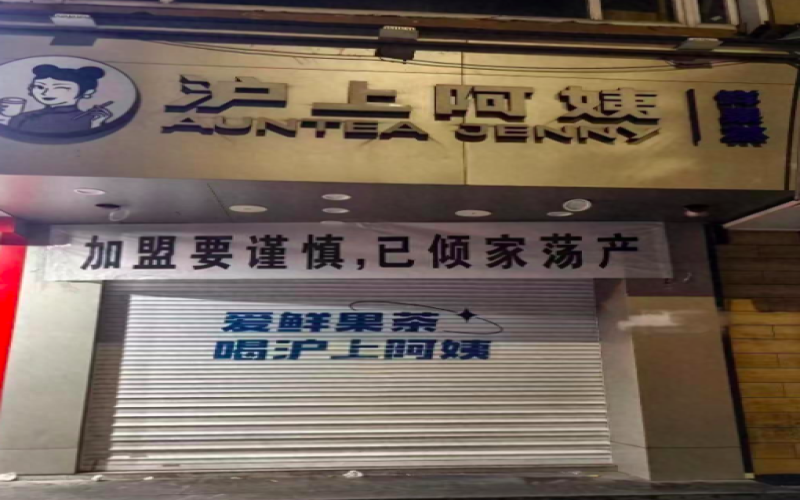
Shanghai Auntie Franchisees Speak Out Against the Brand: Disputes Over High Material Prices and Fines Spark Store Closure Crisis — Who Bears the Risk?
Recently, Southern Metropolis Daily reported that a banner reading "Be cautious about franchising, I've lost everything" appeared in front of an Auntea Jenny franchise store in Ningbo, Zhejiang, quickly sparking public attention. The franchisee claimed that they were heavily fined by the company for purchasing materials from outside sources, and subsequently three stores were unilaterally closed; the brand responded that the closures were mainly due to poor management and had no direct connection to the brand. Both sides stick to their own accounts, and behind the incident lie deep-seated contradictions in the franchise model regarding material pricing, penalty mechanisms, and store subsidies. This article sorts out the sequence of events, presents both sides' statements and industry observations, for the reference of coffee and tea beverage practitioners. [more…]
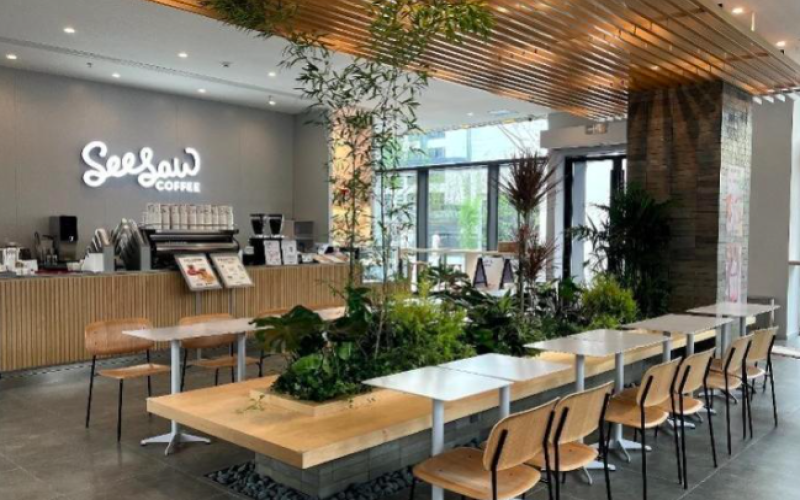
Seesaw's 12th Anniversary Opens Franchise Cooperation: Can Specialty Coffee Brands Break Through and Expand via Franchising?
Once regarded as one of the representatives of domestic specialty coffee, Seesaw, after experiencing a wave of store closures in multiple locations at the end of last year, officially announced the opening of cooperative franchising on its twelfth anniversary. This move has sparked much speculation about its financial condition and brand prospects. Currently, competition in the coffee sector is intensifying, with similar brands such as Manner and M Stand far exceeding Seesaw in store scale, while giants like Starbucks and Luckin are also continuously ramping up their efforts. Facing fewer than a hundred operating stores, Seesaw has chosen to seek a market breakthrough through franchising. Whether it can use this to stabilize its position and expand its customer base still needs to be tested by time. This article will review Seesaw's recent developments and the industry background for coffee enthusiasts' reference. [more…]

Seesaw sued by former landlord, entangled in multiple legal disputes, brand prospects raise concerns
Seesaw, once a thriving specialty coffee chain brand, now frequently makes the news due to legal issues. From being sued by former landlords, to multiple disputes with suppliers and former employees, to mass store closures in first-tier cities and a move to lower-tier markets with lackluster reviews, Seesaw's situation has drawn the attention and concern of many coffee enthusiasts. This article will review the recent turmoil surrounding Seesaw, analyze the operational difficulties behind it, and retain relevant recommendations from Front Street Coffee. [more…]
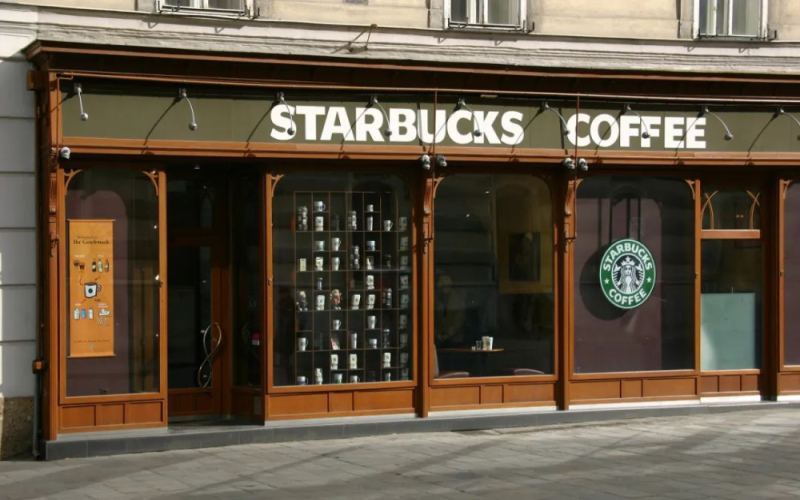
Howard Schultz Returns Twice: Can Starbucks Emerge from Its Business Slump Again?
Starbucks has recently fallen into operational difficulties once again. After Howard Schultz returned in April this year, he implemented a series of bold measures, sparking widespread discussion about the brand's prospects. In fact, this is not the first time Schultz has saved Starbucks in a similar manner—during the 2008 financial crisis, he also led the company out of its trough by closing stores, laying off employees, and reshaping corporate culture. This article reviews how Starbucks restored growth back then through consumer lifestyle research, the "My Starbucks Idea" campaign, rebuilding partner relationships, and direct sourcing, and analyzes the new challenges that unionization efforts under the current pandemic background bring to the brand, as well as the relationship-rebuilding plan Schultz has launched for store partners after his return this time. [more…]
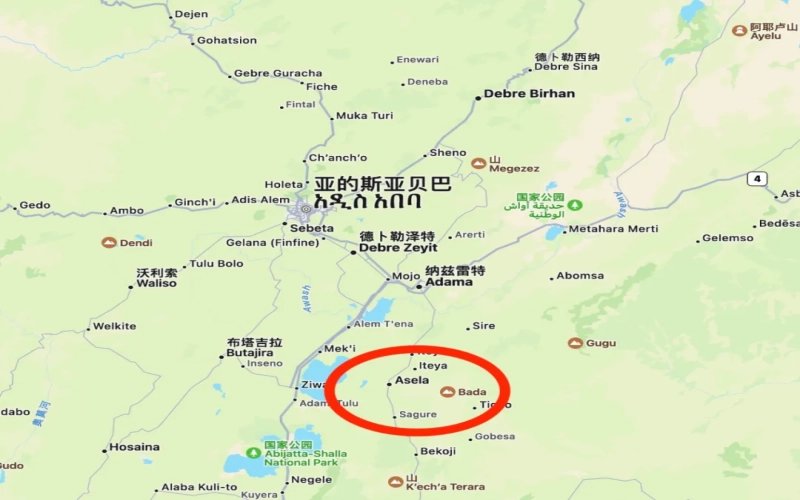
Escalating Security Situation in Southern Ethiopia Poses Potential Threat to Coffee-Growing Regions
Recently, a deadly attack occurred in the Arsi Zone of Oromia Region, Ethiopia, causing casualties and further deteriorating the local security situation. Meanwhile, clashes between Fano armed groups and government forces have intensified in Amhara Region in the northwest, and tensions in Bahir Dar city have escalated. These upheavals not only threaten regional stability but also affect Ethiopia's important coffee industry. With multiple factors overlapping, including currency depreciation, road blockades, and the Red Sea crisis, coffee cultivation costs have risen, exports have been hindered, and international influence faces challenges. This article will review the latest conflict developments and their potential impact on the coffee industry. [more…]
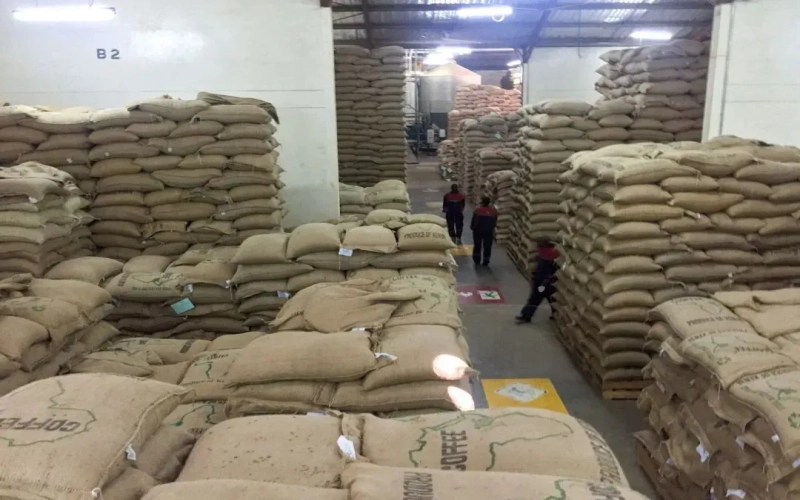
Kenyan coffee auction prices rise 15%, as declining production and political volatility loom over the industry
After the Nairobi Coffee Exchange in Kenya reopened, coffee auction prices rose significantly, with AA-grade green beans fetching US$275 per bag, up 15% from before. Behind this increase are both the direct impact of the government's push for industry reforms and the reduction of intermediary links, as well as multiple pressures such as insufficient processing plant capacity, a shortage of certified planting materials, and the mpox outbreak and domestic political instability. Despite the higher prices, coffee export earnings fell 11.38% year on year, and the industry's outlook remains full of uncertainty. [more…]

Peet's Coffee Confirms Closure of Multiple San Francisco Bay Area Stores, Wave of Closures Hits Ahead of Parent Company Acquisition
Recently, the American coffee chain brand Peet's Coffee, founded in 1966, suddenly announced that it will close multiple stores in the San Francisco Bay Area and surrounding regions by the end of January this year. A company spokesperson stated that this is a difficult decision made to align the business with long-term growth priorities and current market conditions. However, the specific number and locations of the affected stores have not yet been disclosed, leaving employees and customers caught off guard. It is worth noting that this wave of closures comes shortly after news that its parent company, JDE Peet's, is being acquired by Keurig Dr Pepper for $18 billion. Peet's Coffee has over 280 branches in the United States, with about 135 in the San Francisco Bay Area, its largest domestic market. This closure could affect as many as 30 stores in California. Let's learn more about the details of the event together. [more…]
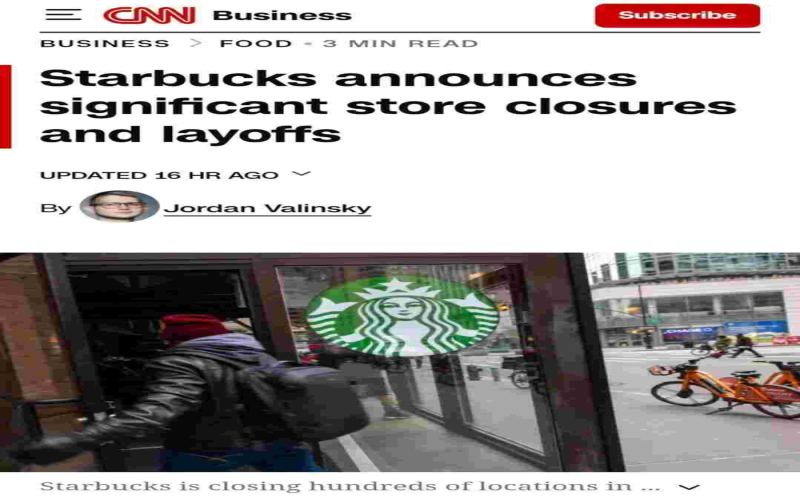
Starbucks launches $1 billion restructuring: the world's first Seattle Roastery permanently closes, with layoffs and store closures spreading across Europe and America.
Starbucks recently announced the launch of a restructuring plan totaling US$1 billion, involving the closure of underperforming company-operated stores and a new round of layoffs. According to a filing submitted to the U.S. Securities and Exchange Commission, most of the store closures will be completed before the end of fiscal 2025, with US$150 million for employee severance and US$85 million covering lease termination and asset disposal costs. CEO Niccol said in an open letter to employees that some stores failed to meet financial targets or create the environment customers expect, so the decision was made to immediately close some stores in North America. Foreign media reports say the restructuring will affect hundreds of coffee shops in the United States and Canada, including the world's first Roastery in Seattle's Capitol Hill and the SODO Reserve store in the company's headquarters building. This Roastery, which opened in 2014, is not only a pilgrimage site for Starbucks fans but also one of the first unionized stores in the brand's history, and its permanent closure without warning has sparked employee speculation about union suppression. At the same time, about 900 non-retail employees will receive layoff notices, marking the second round of layoffs since Niccol took office. Although the Europe, Middle East and Africa business is proceeding as planned, some stores in the UK, Switzerland and Austria will also close due to a portfolio review. [more…]

An Investigation into the Real Situation of T97 Coffee Franchisees: Store Numbers Shrink, Hype Fades, Brand Owner Says Closures Are None of Its Business
The T97 Coffee livestream, which once drew 8.09 million viewers, has now shrunk to a mere four hours in the evening with a sparse audience. Founder Li Xiao once boldly claimed he would open 1,001 stores in a year to surpass Luckin, but official data shows the number of stores rose from 48 to 87 before falling back to 85, with multiple locations closing one after another. Li Xiao attributed the closures to individual franchisee issues, but many franchisees report that the brand provides little management and support, product quality is inconsistent, and once the hype faded, operations became unsustainable. This article examines the current situation of T97 Coffee franchisees, explores brand responsibility and franchise risks behind the high closure rate, and offers reference for those considering joining. [more…]
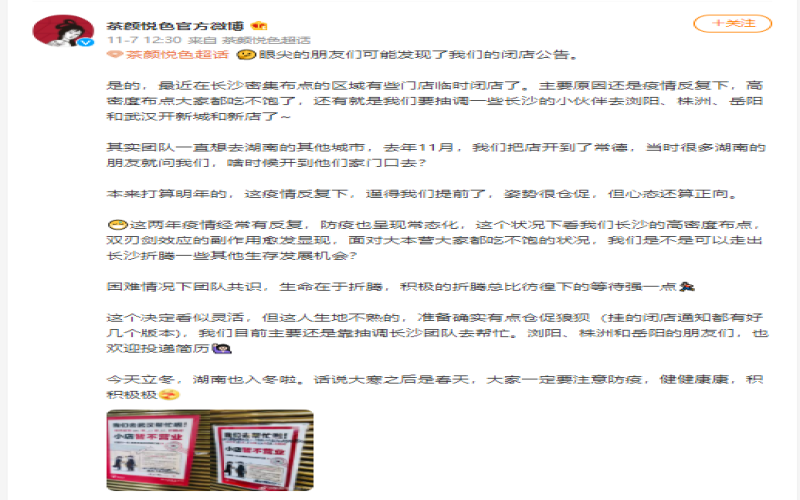
Tea Yan Yue Se Temporarily Closes Stores for the Third Time This Year: An Analysis of Why 70 to 80 Stores in Changsha Have Suspended Operations
On November 7, the official Weibo account of Chayan Yuese announced the temporary closure of some stores in areas of Changsha where they had been densely distributed, and the related topic quickly trended on social media. On November 10, the brand further responded, saying that this was already the third round of concentrated temporary store closures this year: staying put for Chinese New Year at the beginning of the year, the resurgence of the pandemic at the end of July, and this latest adjustment. As a tea beverage brand that started in Changsha, Chayan Yuese's move has drawn widespread attention—against the backdrop of repeated pandemic outbreaks and intensifying industry competition, is its proactive contraction after dense store distribution and reassignment of staff to Liuyang, Zhuzhou, Yueyang and other places for research and site selection a stopgap measure to cope with the crisis, or is it building strength for the next round of expansion? This article sorts through the timeline and background of the three store closures and reviews founder Lü Liang's cautious attitude toward brand expansion. [more…]
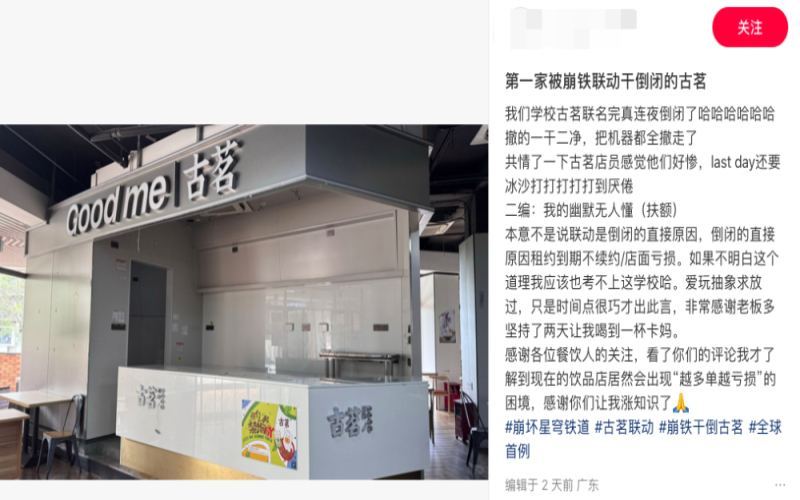
Guming Campus Store Suddenly Withdraws? Closure Controversy After Collab Event Sparks Heated Debate
Recently, a post on social media about a Guming campus store suddenly closing after a collaborative event ended sparked widespread discussion. The poster discovered that the store was still operating during the collaboration with Honkai: Star Rail, but as soon as the event ended, it was deserted overnight—equipment and promotional materials all vanished, with only the lightbox sign left intact. Netizens speculated whether the store had gone bankrupt due to the collaboration, but the poster later clarified that the closure was actually due to lease expiration or operating losses, with no direct link to the collaboration. This incident reflects the hidden operational challenges behind the tea beverage brand collaboration craze: a surge in orders does not equal profitability, and after the hype fades, some stores still cannot escape the fate of closing. [more…]

Seesaw founder Wu Xiaomei responds for the first time to the wave of store closures: focusing on a boutique strategy in East China, with same-store sales growing 22% against the trend
Over the past month, the specialty coffee chain brand Seesaw has been thrust into the spotlight due to a wave of consecutive store closures across multiple locations. From Beijing, Shanghai, and Hangzhou to Chongqing and Wuhan, news of closures has continued to spread, sparking widespread speculation about the company's operating condition. In response, Seesaw founder Wu Xiaomei recently gave an official response to Jiemian News, acknowledging that the brand is undergoing strategic adjustments and has closed some stores that do not fit the "three no's" criteria—those that do not align with the regional focus strategy, brand positioning, and store model—and revealed that same-store sales growth over the past three years reached 22%. At a time when low-priced beverages dominate the market and competition is increasingly fierce, can this brand, which insists on a specialty coffee route, hold its ground with a strategy focused on core commercial districts in East China? This article sorts out the sequence of events and the official response, and includes industry observations such as those from Front Street Coffee. [more…]
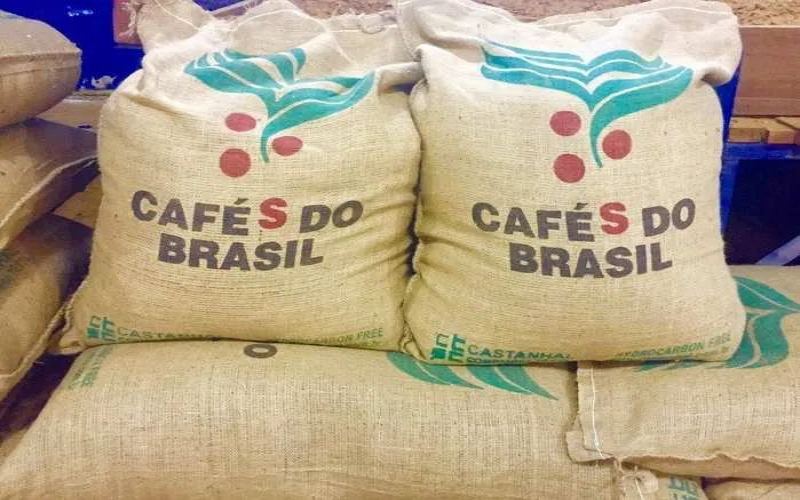
Brazil coffee presale progress only 12%, supply concerns and exchange rate turmoil jointly push prices to a 26-year high
The latest report from Brazilian consultancy Safras shows that as of December 11, 79% of Brazil's 2024/25 coffee crop had been sold, but pre-sales for the 2025/26 crop stood at only 12%, far below the same period in previous years. Hit by drought, forest fires and irregular rainfall, growers are deeply worried about the next season and are holding back on selling. Combined with a plunge of more than 20% in the Brazilian real, domestic Brazilian coffee spot prices have broken the highest record in 26 years. Several institutions warn that international coffee prices will remain high until production becomes clear. To learn more origin news, scan the QR code to follow Coffee Review. [more…]
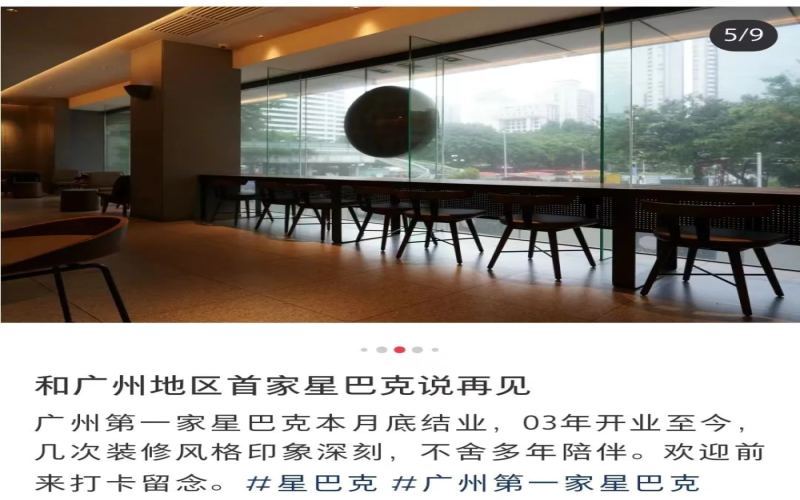
Starbucks' first Guangzhou store is about to close: behind the changes of 24-hour stores and the wave of old store closures
Recently, the news that Starbucks' first store in Guangzhou is about to close has attracted widespread consumer attention. This coffee shop, once famous for being open 24 hours, holds countless memories and emotions for many people. From adjusting its business hours during the pandemic to now facing closure, its departure is not only the end of a store but also reflects the balancing challenge Starbucks faces between expansion and optimizing its layout. Meanwhile, long-established stores in Shenyang, Hong Kong, and other places have also successively announced the end of their operations, with longtime customers expressing their reluctance. This article will take you through the story of this first Guangzhou store, as well as the market logic behind Starbucks' recent store closure trends. [more…]
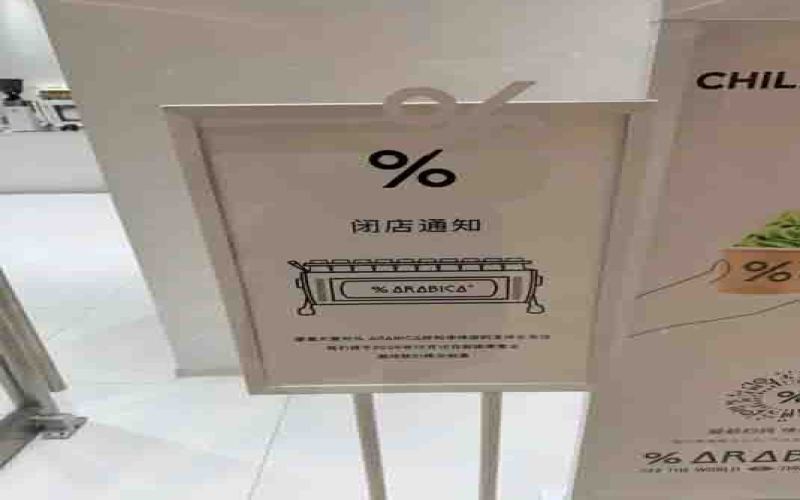
%Arabica's first Hohhot store closed less than six months after opening, sparking heated discussion about the pop-up store model and the value proposition of specialty coffee.
Recently, multiple netizens in Inner Mongolia posted that the %Arabica city first store located in Hohhot MIXC will officially cease operations starting December 16. This store only opened in early July this year simultaneously with the shopping mall, making it the brand's first store in Hohhot, and it was marked as a pop-up store on the official mini-program. It was originally planned to operate for about three months, and after the lease expired, it was renewed to continue operating until a closure notice recently appeared at the entrance. Regular customers felt caught off guard after receiving closure notification text messages and rushed to the store to check in and stock up on coffee beans. Nearby residents believe that %Arabica focuses on specialty coffee, and its pricing of over 40 yuan is not cost-effective; combined with the mall's fading popularity and reduced foot traffic, the pop-up store's business performance was average, so it is not surprising that it delayed until now before withdrawing. Since the beginning of this year, %Arabica stores in Nanning, Guangzhou, Wuxi, and other places have also closed one after another, continuing operations in the form of Kiosk coffee trucks. Some netizens speculate that after the closure of the Hohhot first store, the brand may return in a new form. [more…]

Pacific Coffee faces another wave of store closures: all directly operated stores in Zhuhai will be withdrawn, and the number of domestic outlets in operation continues to shrink.
Pacific Coffee has once again become the focus of industry attention. Recently, reports have emerged that multiple stores in Zhuhai will close in mid-October due to business adjustments, including the Huafa Waterfront Store, Haitian Station Store, and City Balcony Store, all distinctive locations along the Couple's Road. After this round of adjustments, Pacific Coffee's directly operated stores in Zhuhai will all be withdrawn, leaving only three franchise stores. From a peak of nearly 500 stores to fewer than 100 today, the situation of this former second-largest coffee chain brand in China's coffee market is lamentable. This article will review the specific circumstances of these closures, the brand's contraction trajectory in recent years, and the complex emotions of coffee enthusiasts regarding Pacific Coffee's current situation. [more…]